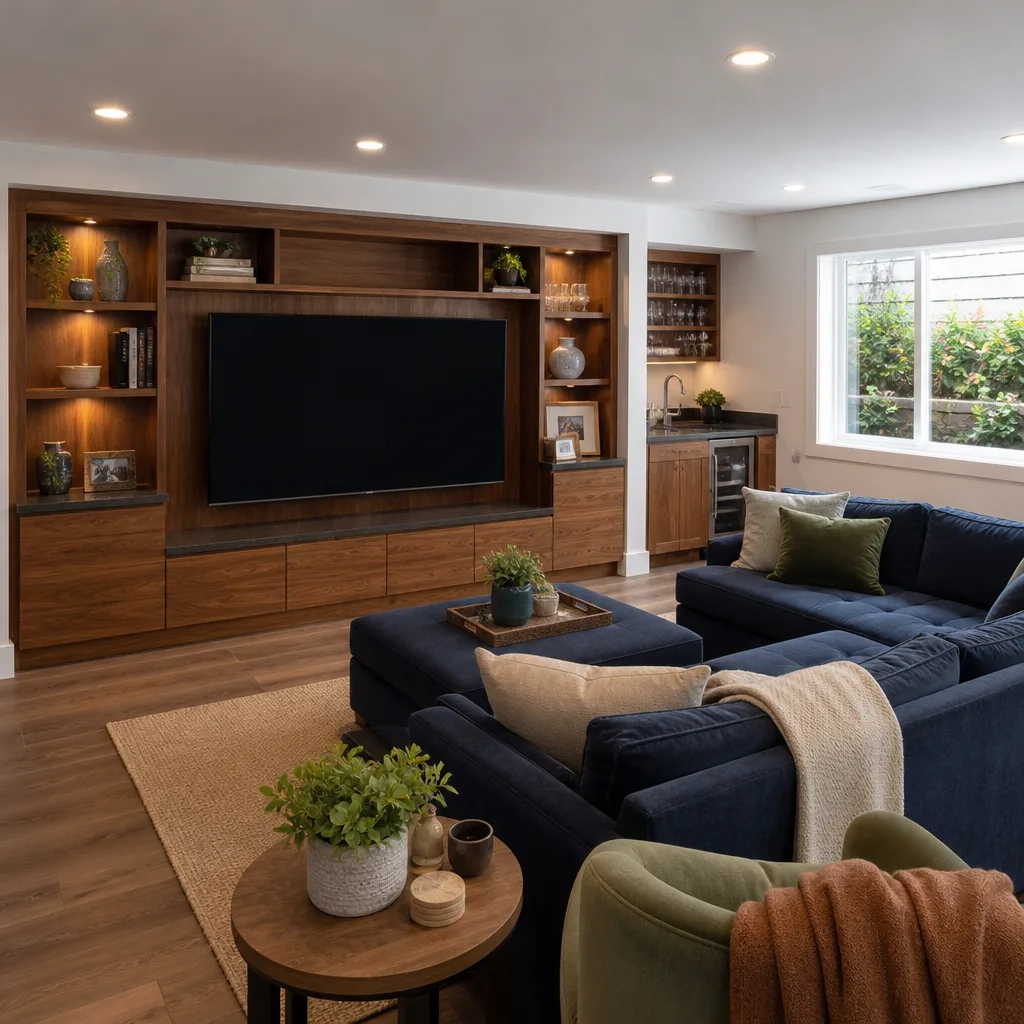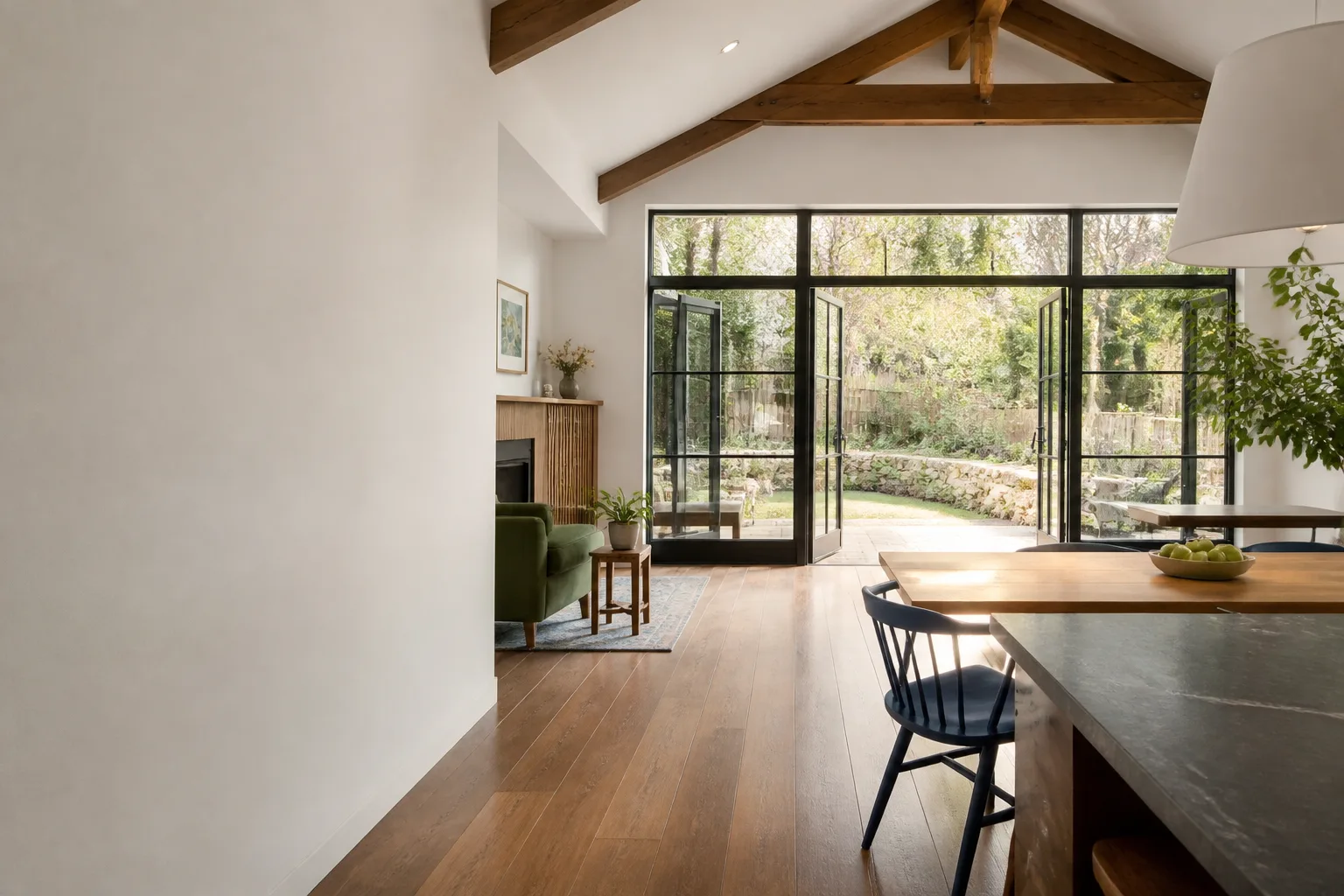
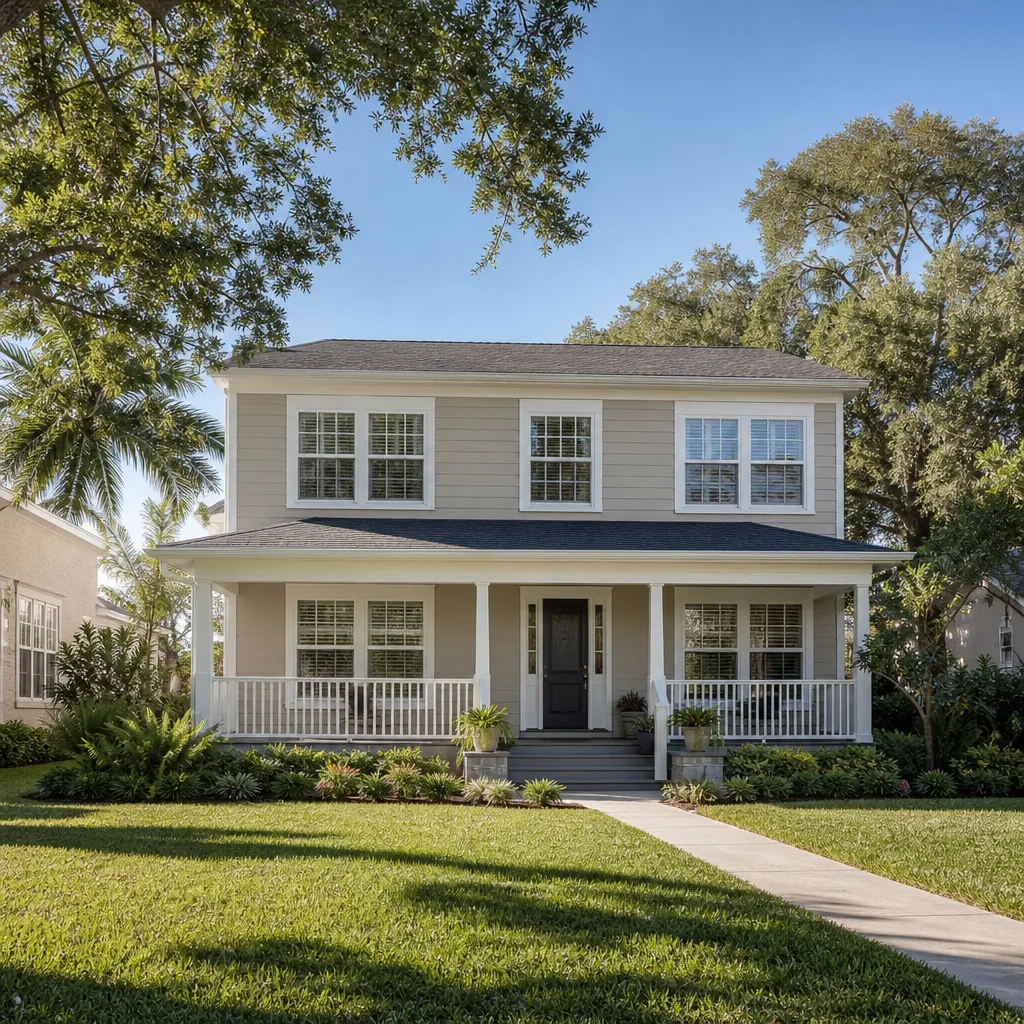
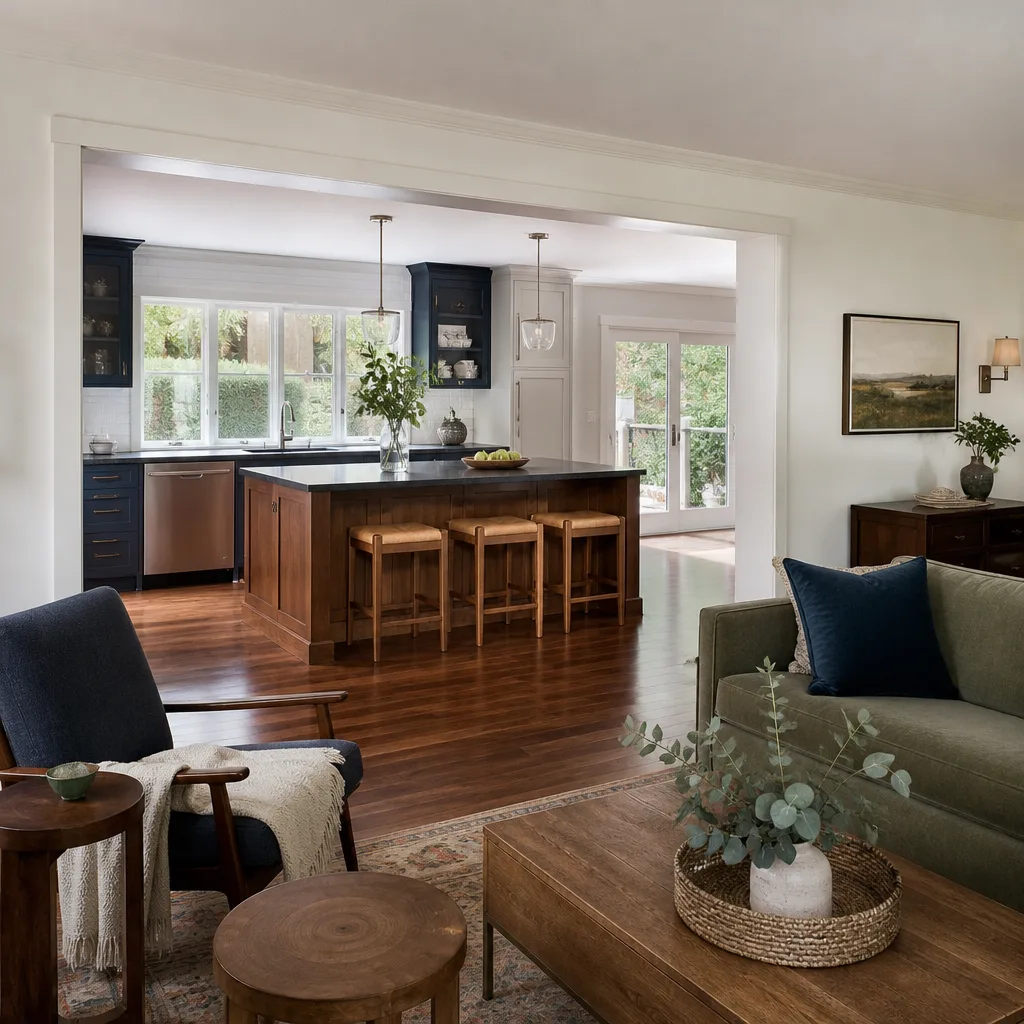

Free written scope consultation - allowances, timeline, and change-order rules on paper before a single trade is scheduled
Styles & brands we work with







See the difference
 Before
 After
After Before
 After
After Before
 After
AfterHow Much Does a Home Addition Cost in Orange County?
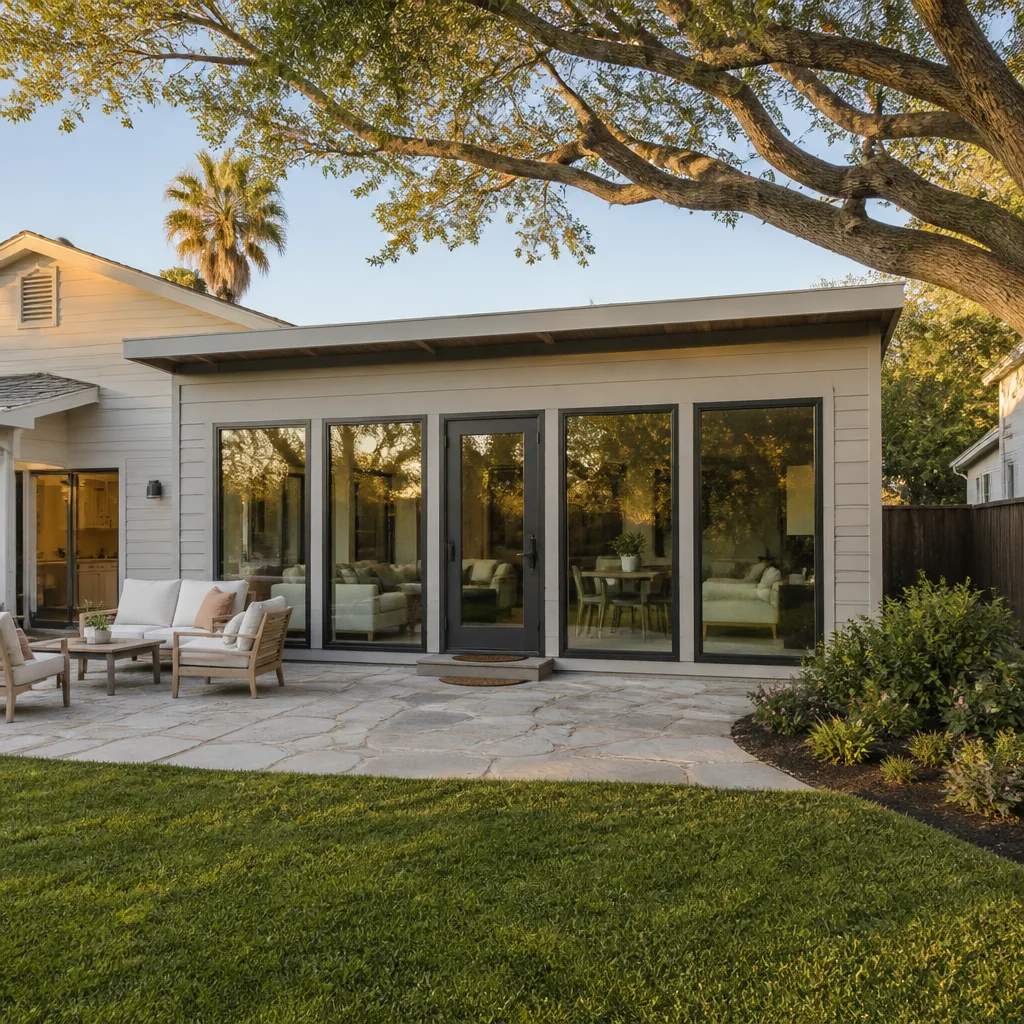
Home additions in Orange County typically run $45,000 to $130,000 in 2026, depending on size, scope, and the condition of your existing structure. A straightforward bump-out or single-room addition usually lands between $45,000 and $85,000, while a larger multi-room addition with a bathroom, foundation work, and upgraded finishes pushes toward the top of that range. These numbers reflect the Orange County market specifically, where labor rates, permitting requirements, and seismic codes all influence the final price.
Before you start sketching plans, know this: the single biggest pricing variable is whether your addition sits on a new foundation or cantilevers off the existing one. That decision alone can swing the budget by $15,000 or more. The good news is you can get a written, line-item price before any work starts, which eliminates the surprise invoices that plague so many Orange County remodels.
Home Addition Cost Breakdown (2026)
Here’s how a typical home addition budget in Orange County breaks down by component. These are real ranges based on current market pricing for this area, not national averages that don’t account for Southern California labor and materials.
| Component | Typical Cost Range | Notes |
|---|---|---|
| Design & Architectural Plans | $3,500 – $9,000 | Required for most Orange County permits; structural engineering may add $1,500 – $4,000 |
| Permits & City Fees | $2,000 – $7,500 | Varies by city: Irvine, Anaheim, Santa Ana, and Newport Beach all have different fee schedules |
| Site Prep & Demo | $2,500 – $8,000 | Includes clearing, excavation, and hauling |
| Foundation | $8,000 – $25,000 | Slab-on-grade runs lower; raised foundation with seismic anchoring runs higher |
| Framing | $10,000 – $28,000 | Lumber prices fluctuate; Orange County seismic codes affect shear wall requirements |
| Roofing | $4,000 – $15,000 | Tie-in to existing roof or new roof section |
| Electrical Rough-In & Finish | $3,500 – $9,000 | New circuits, panel upgrade may add $2,500 – $5,000 |
| Plumbing Rough-In & Finish | $3,000 – $12,000 | Only if adding a bathroom or wet bar; a half bath adds real cost |
| HVAC Extension | $2,500 – $7,000 | Ductwork extension or mini-split installation |
| Drywall & Insulation | $3,000 – $8,000 | California Title 24 energy requirements add to insulation specs |
| Flooring | $2,500 – $9,000 | Engineered hardwood, tile, or LVP; material choice drives this |
| Windows & Doors | $2,000 – $10,000 | Energy-efficient windows required by California code |
| Paint & Finish Work | $1,500 – $6,000 | Interior and exterior touch-up |
| Bathroom Fixtures (if applicable) | $3,000 – $12,000 | Kohler and Moen fixtures, tile, vanity |
What drives the price up most? Square footage is the obvious one, but square footage isn’t linear. A 400-square-foot addition costs less per square foot than a 200-square-foot one because fixed costs like permits, design, and site prep get spread across more area. Foundation type matters too: slab-on-grade in flat areas like Irvine or Fountain Valley is cheaper than a raised foundation with seismic retrofitting in older neighborhoods of Santa Ana or Fullerton. And if your addition includes a bathroom, expect to add $15,000 to $25,000 to the total once plumbing, waterproofing, and fixtures are accounted for.
What drives it down? Keeping the addition a simple rectangle, avoiding plumbing entirely, and choosing mid-range finishes by documented brands like KraftMaid cabinetry rather than full custom. Every Bradford Remodeling project gets a written price before work starts, so you should know exactly where your budget lands before a single tool comes out.
What Affects Home Addition Pricing in Orange County
Orange County isn’t one market. It’s 34 cities with different building departments, different permit fees, and different soil conditions. That’s why two identical additions in Mission Viejo and Garden Grove can differ by $8,000 or more.
- City permit fees and plan check timelines. Newport Beach and Laguna Beach have notoriously thorough plan check processes. That’s not a bad thing, it just takes longer and costs more. Cities like Anaheim and Santa Ana move faster but still require full structural drawings and Title 24 energy calculations.
- Seismic requirements. California building code requires shear walls, hold-downs, and specific anchoring for additions. A single-story addition in Yorba Linda near the Whittier fault zone may require additional engineering that wouldn’t be needed in coastal areas like Huntington Beach.
- Soil conditions. Expansive clay soil in parts of Orange and Tustin can require deeper footings or soil treatment. Sandy coastal soil in Newport and Seal Beach is more stable for shallow foundations. Your geotechnical report, which costs $2,000 to $4,000, determines this.
- Access to the site. A backyard addition on a hillside in San Clemente or a tight lot in Costa Mesa where crews can’t easily bring in equipment will cost more than a street-facing bump-out with direct access. Time is labor, and labor is the biggest line item in any Orange County remodel.
- Scope of the addition. A family room bump-out without plumbing is a different project than a primary suite with a bathroom and walk-in closet. Every wet wall adds plumbing rough-in costs, and every new circuit adds to the electrical load. If your existing panel is at capacity, a new panel adds $3,000 to $5,000.
- Finish level. Cambria or Caesarstone countertops, custom Wellborn cabinetry, and Kohler fixtures all have manufacturer spec sheets and warranties. You can specify entry-level versions of these brands or upgrade within the line. The structure costs what it costs; finishes are where you have the most control.
How to Save on a Home Addition in Orange County
Saving money on an addition doesn’t mean cutting corners. It means making deliberate choices about scope, materials, and timing before you sign anything. Here’s the approach that works in this market.
- Lock your scope before you start. Changes mid-project are where budgets die. A written scope of work, priced line-by-line before construction starts, is the single best protection against cost creep. That’s how Bradford Remodeling operates: the price is written down, and it doesn’t move at the door.
- Keep the footprint simple. Every corner, bump-out, and angle adds framing labor, roofing complexity, and finish work. A rectangular addition with a simple roofline costs less than a complicated one with the same square footage.
- Skip the plumbing if you can. A bedroom or family room addition without a bathroom can save $15,000 to $25,000. If you absolutely need a bathroom, a half bath costs significantly less than a full bath with a shower.
- Choose mid-range documented brands. KraftMaid cabinets, Moen fixtures, and standard Cambria colors carry manufacturer warranties and predictable quality. You don’t need to pay custom-cabinet prices to get a kitchen that holds up.
- Time it deliberately. Orange County’s building season runs year-round, but late spring and early summer see the highest demand. Booking in the slower winter months can sometimes squeeze better pricing on labor, though material costs are less negotiable.
- Get a real estimate, in writing, for free. Call (562) 262-2907 and ask for a written estimate on your addition. No numbers that shift at the door. You’ll get a price and a scope before you commit to anything.
Is a Home Addition Worth It in Orange County?
Here’s the math that matters. Orange County median home prices sit far above the national average, which means the cost per square foot to add space is usually lower than the cost per square foot to buy it. In cities like Irvine, Lake Forest, and Fountain Valley, existing homes routinely sell for $600 to $900 per square foot depending on the neighborhood. A well-executed addition at $180 to $350 per square foot, all in, creates real equity the day it’s done.
That said, the value only materializes if the work is done right, permitted, and documented. An unpermitted addition in Orange County is a liability when you sell. Buyers’ lenders flag it, appraisers discount it, and some cities require retroactive permits that can force you to open walls. Every Bradford Remodeling project is permitted, inspected, and documented, with a written guarantee you can show a future buyer.
And here’s the part most homeowners don’t consider: the 365-Day Done Right Promise. If the work fails within a full year of completion, Bradford comes back and corrects it at no charge. That’s not a verbal assurance. It’s written into the contract. When you’re spending $45,000 to $130,000, a one-year guarantee in writing is the difference between a contractor who stands behind the work and one who disappears when the first crack shows.
Home Addition vs. ADU vs. Garage Conversion: What’s the Difference in Cost?
If you’re considering an addition, you’re probably also looking at an ADU (accessory dwelling unit) or a garage conversion. Here’s the straight comparison for Orange County in 2026.
- Home Addition: $45,000 to $130,000. Attached to the existing house, integrated into the roofline and foundation, requires the full permit process. Best for expanding living space like a family room, primary suite, or expanded kitchen.
- ADU Construction: $90,000 to $220,000. A separate or attached dwelling unit with its own kitchen, bathroom, and entrance. More expensive because it’s essentially a small house, but it generates rental income or serves as multigenerational housing. California has streamlined ADU permitting, but the build-out is substantial.
- Garage Conversion: $30,000 to $80,000. Cheaper because the shell already exists. You’re converting existing square footage rather than building new. The trade-off is losing garage or storage space, and the scope is limited by the existing footprint.
The right choice depends on what you need. A home addition is for when you need more living space connected to the house. An ADU is for when you want a separate unit. A garage conversion is for when you want space but don’t want to build new. If you’re not sure, call us and we’ll walk through your specific lot, your goals, and your budget. The number is (562) 262-2907.
Local Considerations for Orange County Additions
Orange County is a patchwork of distinct cities, each with its own building department, plan check process, and fee structure. We work across the county and see patterns worth knowing.
Coastal cities like Newport Beach, Laguna Beach, and Huntington Beach tend to have stricter design review and higher permit fees. Some coastal zones require additional environmental review, which adds time and cost before construction even starts. If you’re within a few blocks of the water, budget for a longer entitlement phase.
Inland cities like Orange, Tustin, and Santa Ana move faster on permits, but soil conditions can be trickier. Expansive clay in parts of central Orange County means your foundation design has to account for soil movement. Your geotechnical report will determine what’s needed, but don’t skip it to save money. That’s a false economy.
Planned communities like Irvine, Mission Viejo, and Rancho Santa Margarita have HOAs with their own architectural review processes. You’ll need HOA approval in addition to city permits, and that can add 30 to 90 days to your timeline depending on how often the review board meets.
Hillside lots in San Clemente, Yorba Linda, and the Anaheim Hills area require additional engineering. Slope stability, retaining walls, and foundation anchoring all come into play. These are exactly the kinds of sites where you want a contractor who writes everything down and follows through, because the variables stack up fast.
One thing that’s consistent countywide: California’s Title 24 energy code. Every new addition must meet current insulation, window efficiency, and HVAC standards. That’s not optional, and it does add cost. But it also means your new space will be more comfortable and cheaper to condition than the rest of whatever older house it’s attached to.
What a Square-Away Job Close Looks Like
Most Orange County homeowners have heard a remodel story that went sideways. The crew shows up late, the price creeps up, the site stays a mess, and at the end the homeowner gets a handshake and a pile of receipts. That’s not how this works when the project is run by the book.
A squared-away home addition close looks like this: the site is clean, the scope matches what was written before the job started, every permit has its final inspection sign-off, and you have a signed written guarantee in your hand. The 365-Day Done Right Promise is a one-year warranty on the work, with a free return visit if anything fails inside that window. You should not have to ask for that piece of paper. It should already be in your hand before the crew pulls off site.
That’s The Garrison Standard, and it’s the framework every Bradford Remodeling project runs on. Part of the Garrison Partners family since 2004, Bradford Remodeling Co Orange County is independently owned and operated, and held to the same standard as every Garrison Partners location. Background-checked, uniformed technicians. Live-person phone coverage around the clock. Written pricing. A guarantee that covers the work for a year. All documented, all in writing, nothing left to a handshake.
FAQs – Home Addition Cost in Orange County
How much does a home addition cost per square foot in Orange County?
In Orange County, home additions generally run $180 to $350 per square foot depending on whether the space includes plumbing, the foundation type, and the finish level. A simple family room addition with no plumbing might land at $180 to $220 per square foot, while a primary suite with a full bath runs $280 to $350 per square foot. The per-square-foot number drops as the addition gets larger because fixed costs like permits and design spread across more area. Call (562) 262-2907 for a written estimate on your specific project.
How long does a home addition take in Orange County?
Most home additions in Orange County take 3 to 6 months from start to final inspection, with plan check and permitting adding 1 to 3 months before construction begins. A smaller bump-out might be done in 8 to 10 weeks once work starts, while a larger addition with a bathroom and upgraded finishes typically runs 16 to 24 weeks. City plan check times vary: cities like Santa Ana and Anaheim are usually faster, while coastal cities take longer. Your written estimate should include a timeline, not just a price.
Is it cheaper to build up or out in Orange County?
Building out is usually 10% to 20% cheaper than building up in Orange County for the same square footage. A second-story addition requires structural reinforcement of the existing first-floor walls, stair construction, and tie-in to the existing roofline, all of which add cost. However, on small lots where there’s no room to expand the footprint, going up is the only option. Foundation work for a ground-level addition is expensive, but vertical structural work is more expensive per square foot.
Do I need a permit for a home addition in Orange County?
Yes, every structural home addition in Orange County requires permits, full architectural drawings, and Title 24 energy calculations. Unpermitted additions create problems when you sell: lenders flag them, appraisers discount them, and some cities require retroactive permits that can mean opening finished walls. Bradford Remodeling handles the full permit process, and every project is inspected and documented, so you’re not stuck explaining anything to a future buyer.
What’s the most expensive part of a home addition?
The foundation and framing combined typically account for 30% to 40% of the total project cost in Orange County, which translates to roughly $18,000 to $53,000 on a typical addition. Labor is the single biggest cost driver in this market, followed by lumber and concrete. If your addition includes a bathroom, plumbing and waterproofing add another $15,000 to $25,000. The finishes you choose are the part you control most directly, and that’s where written line-item pricing keeps you from surprises.
Can I finance a home addition in Orange County?
Yes, common financing options include HELOCs, home equity loans, cash-out refinances, and construction-to-permanent loans. With Orange County home equity sitting high relative to national averages, many homeowners tap equity rather than borrowing against the project. A written, itemized estimate helps with any lender conversation, because lenders want to see real numbers, not rounding. That’s part of what every Bradford Remodeling project includes.
Ready to see real numbers for your addition? Bradford Remodeling Co Orange County offers free written estimates with no obligation. Call (562) 262-2907 and get a price in writing before any work starts. You can also explore our home page to see how The Garrison Standard applies to every project we run, or read about our Home Addition in Orange County services in more detail.
Written by Curtis Lane, Owner at Bradford Remodeling Co Orange County, serving Orange County since 2004.
Pricing reflects the Orange County market as of 2026. Bradford Remodeling Co Orange County offers free estimates – call (562) 262-2907.
What Our Customers Say
"Home remodel with a new floor plan. Handled structural work and permits without drama."
- Gus R."Respectful crew. Covered the floors and swept every day."
- Jackie T."Primary bath redo. Tile is straight, shower pan was flood tested, and the vanity fits perfectly."
- Tricia S.