
Free written scope consultation - allowances, timeline, and change-order rules on paper before a single trade is scheduled
Cover Home Additions & ADU: The Orange County Owner’s Guide
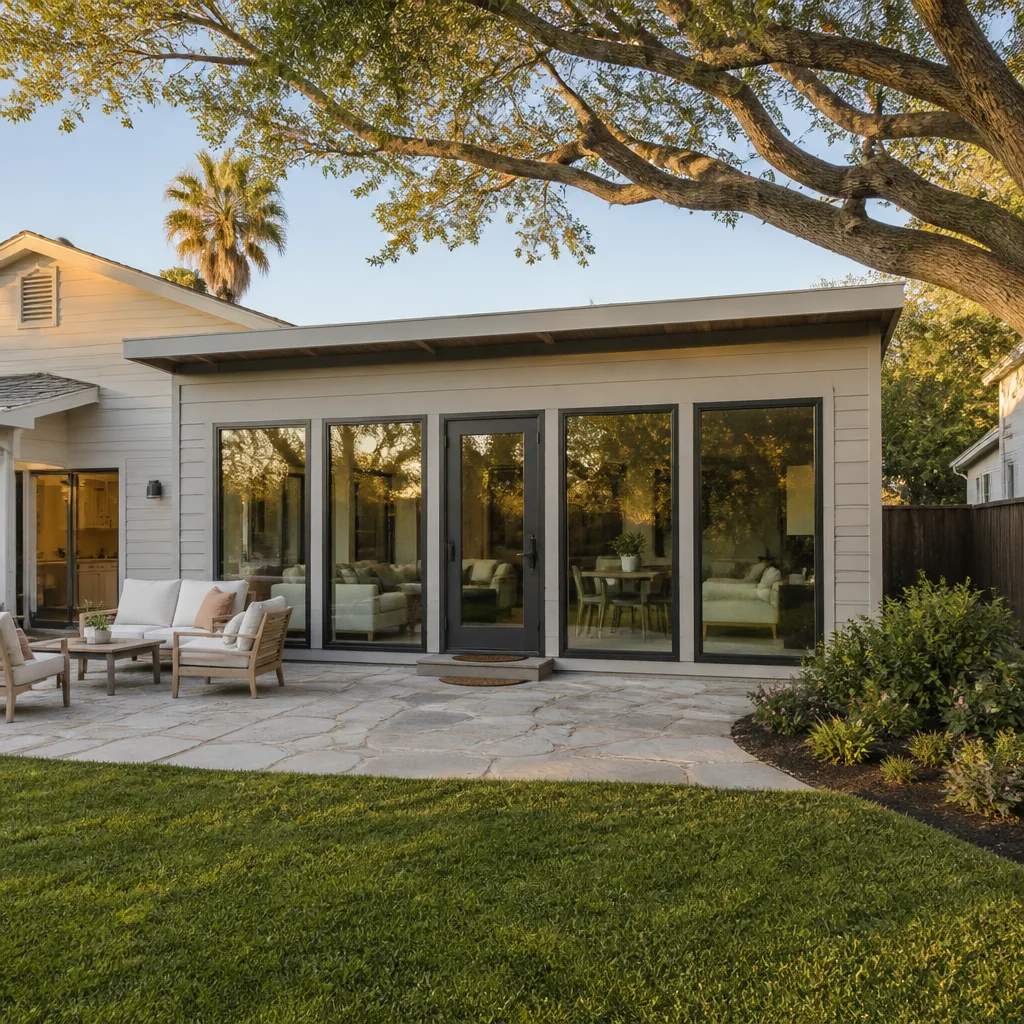
We stock and install Cover-compatible home additions and ADU components throughout Orange County, with full-project pricing typically running $45,000 – $130,000 for additions and $90,000 – $220,000 for detached ADUs. Most homeowners contact us because their existing structure is showing signs of wear, from failing roof flashings and dry-rotted exterior sheathing to doors that no longer close square. You’ll usually find the problem at the connection points: where the addition ties into the original roofline, where the foundation meets the existing slab, or where windows and doors were set against framing that has since settled. The fix is rarely cosmetic, and it almost never gets cheaper by waiting.
Bradford Remodeling Co Orange County is an independent remodeling contractor serving Orange County. We are not affiliated with Cover. We do, however, work with Cover-built additions and ADUs regularly enough to know their framing conventions, load paths, and the specific ways water finds its way in when a detail fails.
Which Cover Models This Applies To
Cover works as a design-build prefab company, which means their Orange County projects arrive as panelized wall sections, roof trusses, and pre-cut framing packages rather than stick-built lumber cut on site. The advantage is speed and precision. The tradeoff is that replacement parts need to match the original panel dimensions, stud spacing, and corner details exactly, or you’re shimming and sistering your way through a project that should have gone together clean.
The compatibility question comes down to two things: the series your Cover project was built under, and the year it went up. Early Cover additions in Orange County, particularly those permitted before the 2020 code cycle, used 2×4 exterior walls with OSB sheathing and a simple stucco finish system. Newer builds run 2×6 walls, engineered headers at openings, and hold-down hardware at shear wall corners. When we do a repair or extension on a Cover structure, we measure the actual framing, not just the finish dimensions. A quarter-inch difference in wall thickness changes how the trim dies into the windows, how the drywall meets the ceiling, and how the exterior stucco or siding terminates.
For most owners, the smart decision is OEM-equivalent repair rather than trying to match Cover’s exact panel spec. The factory panels did their job, but a quality aftermarket framing package, properly engineered and permitted through the city or county, gives you the same structural performance without waiting on a manufacturer’s production schedule. We document everything, and the written price covers the full scope before work starts.
Styles & brands we work with







Signs Your Cover Home Additions & ADU Is Failing
- Water staining at the ceiling where the addition meets the original house. This is almost always a failed flashing detail at the roofline transition. Cover’s early Orange County installs sometimes used a single-layer roof-to-wall flashing that breaks down after 8 to 10 years of full sun exposure, especially on south-facing slopes.
- Doors that stick at the top corner of the frame. Your addition is settling or the original foundation is moving. Orange County’s expansive clay soils in areas like Irvine and Lake Forest swell and shrink with the rain cycle, and the older pier-and-beam additions move differently than the slab-built structures they’re attached to.
- Cracks in the stucco that run diagonally from window corners. This is not a cosmetic stucco problem. It’s the wall sheathing flexing because the shear panel or hold-down hardware wasn’t installed to the current seismic standard. In Orange County, that’s a code requirement, not a suggestion.
- Dry rot or soft wood at the bottom plate where the addition sits on the foundation. Sprinkler overspray, poor drainage, or missing weep screed lets water wick up into the framing. By the time you see it on the interior baseboard, the bottom plate and possibly the first several inches of studs are compromised.
- Floor bounce or a soft spot near the exterior door of a Cover ADU. This usually traces to the rim joist or the door threshold detail, where water has been getting in for years and the framing underneath has weakened. It’s repairable, but the fix means opening the floor, not just replacing the door.
See the difference
 Before
 After
After Before
 After
After Before
 After
AfterReplacement Cost & What’s Included
For a Cover home addition or ADU repair in Orange County, you’re looking at these installed price ranges depending on scope:
- Structural repair at the roof-to-wall connection: $4,500 – $9,000
- Full ADU reroof and flashing replacement: $8,000 – $20,000
- Door and window replacement with new flashing: $4,500 – $15,000 per opening assembly
- Full garage conversion (if repurposing a Cover-built structure): $30,000 – $80,000
- Complete home addition (new build, Cover-compatible methods): $45,000 – $130,000
- Detached ADU construction: $90,000 – $220,000
Every Bradford quote is a written, line-item price before work starts. The number on the page is the number on the invoice. That includes all necessary permits, structural engineering where required, demolition and debris removal, materials, labor, and a walk-through at close so you see exactly what was done. If anything fails within one year, the 365-Day Done Right Promise brings us back at no charge. That’s The Garrison Standard, and it’s in writing every single time.
DIY or Call Us?
You can safely inspect a few things on your own. Check the caulking at window and door perimeters. Look for visible water staining on ceilings and walls. Walk the exterior and note any cracks wider than a dime or stucco pulling away from the framing. Those observations help us give you a faster, more accurate assessment over the phone.
What you should not do is cut into a load-bearing wall, remove stucco to “see what’s behind it,” or attempt to lift or shim a settled structure. Cover-built additions in Orange County are engineered assemblies. Opening one without understanding the load path, the shear requirements, or the water management details can turn a $5,000 repair into a $40,000 structural failure. This is not work where a ladder and a reciprocating saw get you anywhere good. Call us at (562) 262-2907. We’ll send someone who knows what they’re looking at, and we’ll put the fix in writing before any work starts.
FAQs
With proper flashing, drainage, and maintenance, a Cover-built structure should last 30 to 50 years structurally in Orange County’s coastal climate, though exterior finishes like stucco and roofing typically need attention at the 10-to-15-year mark. The weak points are the transitions: roof-to-wall, wall-to-foundation, and every window and door opening. Those need inspection every 3 to 5 years. Call (562) 262-2907 for a full assessment, and we’ll quote the repair or replacement honestly.
Most Cover addition and ADU failures can be repaired without tearing down the structure, as long as the damage hasn’t compromised more than a third of the framing in a given wall section. We’ll open only what we need to open, sister or replace the damaged members, and close it back up to current Orange County code. Schedule a free estimate at (562) 262-2907 and we’ll tell you exactly what you’re dealing with.
A focused repair, like replacing a roofline flashing or a rotted bottom plate, typically runs 2 to 5 working days once permits are in hand. A full ADU build or major addition runs 4 to 8 months from permit approval to final inspection, depending on scope and the city’s inspection schedule. We give you a written timeline with the written price, and Curtis Lane holds the schedule as tightly as the tolerances.
We stock the common structural materials we use on Cover repairs: dimensional lumber in 2×4 and 2×6 profiles, engineered LVL headers, hold-down hardware, flashing products, and sheathing in the thicknesses Cover structures require. Anything outside that, we source through our supplier network, which includes the same name-brand materials we use on every project: KraftMaid, Cambria, and Silestone for interior finishes, plus GAF, James Hardie, and Therma-Tru for exterior work. Call (562) 262-2907 with your project details and we’ll confirm availability same day.
Written by Curtis Lane, Owner, Bradford Remodeling Co – Orange County at Bradford Remodeling Co Orange County, serving Orange County and nearby areas.


