

Last updated October 16, 2026






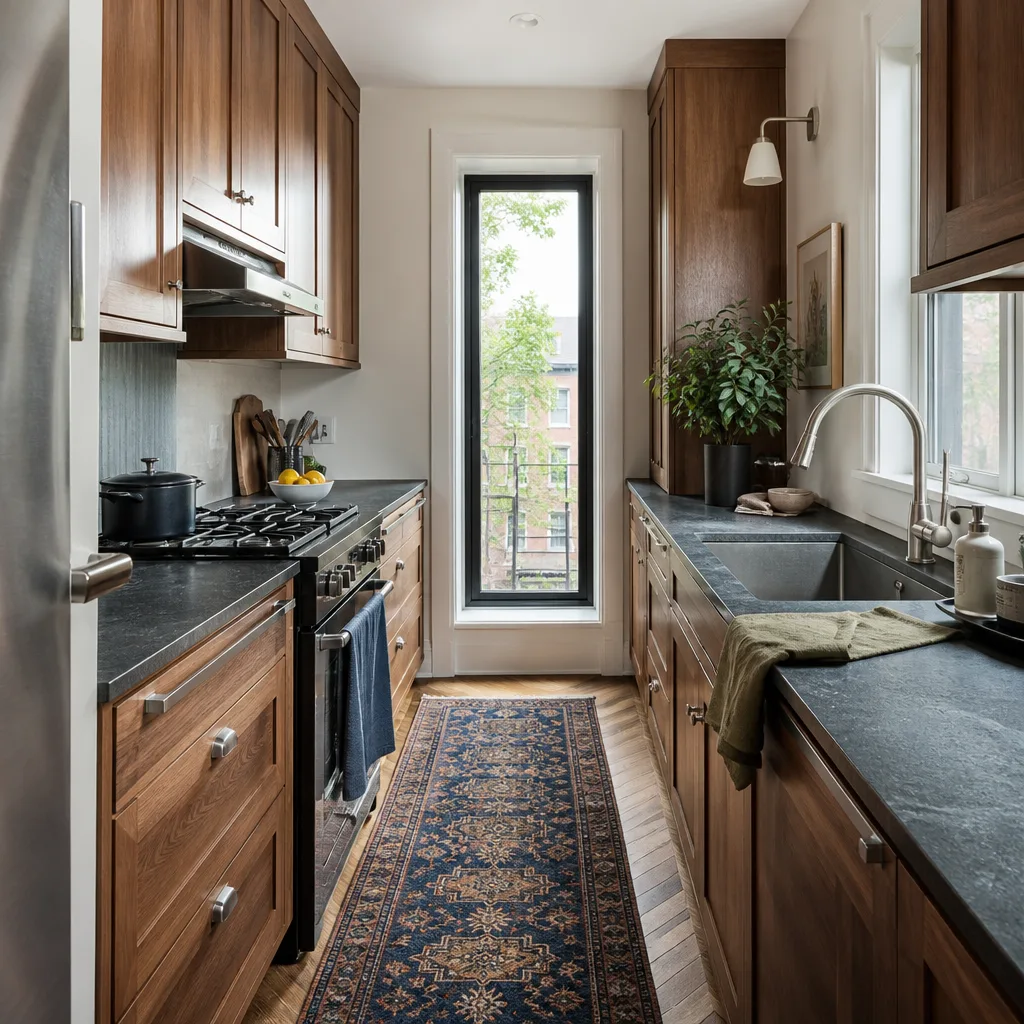

Free written scope consultation - allowances, timeline, and change-order rules on paper before a single trade is scheduled
How to Hire a Construction Contractor in Orange County: A Step-by-Step Guide
The California Contractors State License Board logged over 20,000 consumer complaints in a recent year, and the majority involved contractors who had reviews, had references, and had given three bids. That is the uncomfortable truth most hiring guides avoid. Here in Orange County, where a single gut renovation can run past $150,000, the standard advice to “get three bids and check Yelp” fails homeowners every week. This guide replaces surface-level checklists with a document-based vetting process that exposes unqualified contractors before you sign anything, and it pairs well with our Complete Guide to Construction in Orange County for broader project planning. You will learn exactly what to verify, what to demand in writing, and how to spot Orange County-specific red flags that generic advice never mentions.
Styles & brands we work with







Quick Answer
To hire a construction contractor in Orange County, verify the contractor’s CSLB license and insurance certificates before discussing price, demand a written contract that meets California Business & Professions Code §7159, and never accept the lowest bid without confirming who actually performs the work. A legitimate contractor hands you license numbers, insurance certificates, and a written price without hesitation. Bradford Remodeling Co Orange County puts every price and guarantee in writing before work begins, backed by the 365-Day Done Right Promise.
Table of Contents
- Step 1: Verify the CSLB License Before You Talk Price
- Step 2: Request Insurance Certificates and Call the Insurer
- Step 3: Require a Written Contract That Meets California Law
- Step 4: Evaluate Bids Without Falling for the Low-Price Trap
- Step 5: Spot Orange County-Specific Contractor Red Flags
- Step 6: Pin Down Materials and Brands Before Work Starts
- Step 7: Know What a Squared-Away Job Close Looks Like
- Common Mistakes to Avoid
- When to Call a Professional
- Frequently Asked Questions
- The Bottom Line
Step 1: Verify the CSLB License Before You Talk Price
The single most important hiring decision you make in Orange County happens before a contractor walks through your door. You check the license. Not the review page, not the portfolio, not the Facebook recommendations. The license. The California Contractors State License Board maintains a real-time database at cslb.ca.gov where you enter the contractor’s name or license number and see their current status, classification, bond amount, and workers’ compensation coverage all at once. A contractor who hesitates to give you a license number, or whose license shows “expired,” “suspended,” or “inactive,” should not get a second conversation.
But the license classification matters as much as the license itself. California issues licenses by trade category, and each classification authorizes only specific work. A “B” General Building license allows a contractor to frame, demolish, and build across multiple trades. A “C-54” covers tile work. A “C-36” covers plumbing. An “A” covers engineering. When a contractor with a C-54 tile license tells you he will oversee your whole-home remodel, he is not licensed to do that job. In Orange County, where many homes in Fullerton, Anaheim, and Santa Ana date to the 1950s and 1960s, unpermitted structural work by under-licensed contractors creates real safety and resale problems.
Before you even discuss a kitchen remodel or a whole-home renovation, write down the license number the contractor gives you. Then, on your phone, pull up the CSLB database and verify three things: the license is active, the classification matches the work you need, and the name on the license matches the person or company you are talking to. If the contractor operates as “One Call Construction” but the license belongs to a different entity, ask why. Subcontracting without disclosure is one of the most common complaints Orange County homeowners file. A general contractor will often have a B license and carry subs for mechanical trades, and that is normal, provided it is disclosed. What is not normal is a contractor who conceals that the crew doing your work is not his own.
This first step is not optional. It eliminates roughly a third of the problem contractors in the Orange County market before you spend another hour. Bradford Remodeling Co Orange County holds itself to General Contractor in Orange County standards that begin with transparent licensing and disclosure on every job.
Step 2: Request Insurance Certificates and Call the Insurer
After the license, the second document you demand is a Certificate of Insurance, or COI. This is a one-page document from the contractor’s insurance carrier proving the policy exists, names the covered contractor, shows the coverage amounts, and lists the policy effective dates. In Orange County, where a single worker injury on your property can become your liability under California’s peculiar workers’ compensation laws, this piece of paper is not a formality. It is the difference between a covered claim and a lawsuit that lands on your homeowners policy.
Request two certificates specifically. First, general liability insurance. This covers damage the contractor causes to your home or property. The residential standard in Orange County is generally $1,000,000 per occurrence, but do not quote a number as if it were a legal requirement. Ask the contractor what limits he carries and whether they match the scope of your project. Second, workers’ compensation insurance. California law requires this if the contractor has employees, and here is the key point: ask whether the contractor is exempt. Some sole proprietors with no employees file for exemption from workers’ comp. That is legal, but it means if a worker is hurt on your property, that worker is not covered by the contractor’s workers’ comp policy. The homeowner’s insurance often becomes the target. For any project larger than a single trade repair, we recommend working with a contractor who carries workers’ comp. Period.
The step most Orange County homeowners skip is calling the insurance carrier to confirm the certificate is current. A COI is just a piece of paper. Insurance gets canceled. Contractors forget to renew. A smart homeowner calls the agent or carrier listed on the certificate, gives the policy number, and asks one question: “Is this policy active as of today?” This takes five minutes and closes a loophole that dishonest contractors have exploited for decades. When we provide a certificate to a homeowner, we expect that call. It does not offend us. It proves the system works.
Step 3: Require a Written Contract That Meets California Law
California Business & Professions Code §7159 exists for one reason: contractors who give verbal estimates and then reprice at the door ruined enough homeowners that the state wrote a law to stop it. The law requires any home improvement contract over $500 to be in writing and to include specific elements. When you know what those elements are, you can spot a weak contract in two minutes.
Here is what your written contract must contain under California law. First, a detailed description of the work to be performed, including the scope, the materials, and the products to be used. “Remodel kitchen” is not a description. “Remove existing cabinets and countertops, install KraftMaid cabinetry per plan, install Cambria quartz countertops, replace sink with Kohler undermount model, re-route supply lines” is a description. Second, the total contract price, itemized clearly enough that you understand where the money goes. Third, a payment schedule, with the down payment clearly stated. California limits home improvement down payments to the lesser of $1,000 or 10% of the contract price. If a contractor asks for 30% or 50% down on a $100,000 remodel, that is not just aggressive, it is outside the law. Fourth, the approximate start date and completion date. Not exact to the day, but a reasonable window. Fifth, the contractor’s license number, written on the face of the contract. Sixth, a notice of your right to cancel within three business days, as required by California law, plus a notice about the contractor’s bond.
Two elements that get filed away and matter enormously at the end of the job: a description of what the contractor will and will not do regarding permits, and the change-order procedure. Every legitimate contractor in Orange County pulls permits for work that requires them, and the contract should say so in writing. The change-order clause states in plain language how changes to scope will be priced in writing before the work changes. A contractor who cannot produce a written contract containing these elements before you sign is not ready for your project. For a deeper look at what a disciplined remodel process looks like, see what we cover under Home Remodeling in Orange County.
Step 4: Evaluate Bids Without Falling for the Low-Price Trap
The lowest bid in Orange County is often the contractor who is uninsured, unlicensed, or planning to substitute materials and labor without telling you, which is why understanding the Construction Cost Breakdown: The Orange County Homeowner’s Reference for 2026 matters before you compare numbers. That is not a guess. It is the pattern we have seen repeatedly across the market, from Anaheim to Mission Viejo. A bid is not just a number. It is a promise about who does the work, what materials go in, and whether the job gets permitted and inspected. When one bid comes in 30% below the others, the difference is almost always explained by one of three things: the contractor has no workers’ comp, the contractor is not pulling permits, or the contractor plans to use materials that will not hold up.
Here is how to read a bid like an Orange County homeowner who knows the trade. First, compare the descriptions, not the totals. Bid A says “install cabinets” for $18,000. Bid B says “remove and haul existing cabinets, install KraftMaid plywood box construction cabinets, soft-close hinges, full overlay doors, crown molding to ceiling, per plan sheet 4” for $24,000. Those are not bids for the same work. Bid A will require add-ons before the job is half done, and by then you are committed. Bid B describes the actual job. Second, look for what is missing. Every bid should state who pulls the permits. If the word “permit” appears nowhere, call and ask. A contractor who avoids permits on a remodel that requires one is signaling that he also avoids inspections, code compliance, and the legal accountability those inspections create.
Third, ask about subcontractors. A legitimate general contractor will tell you upfront which trades he subs out. In Orange County, most remodelers self-perform carpentry and sub out electrical, plumbing, and HVAC. That is normal and often produces better craftsmanship. What is not normal is a contractor who hides his subs, or who uses day labor that changes every morning. Fourth, get the payment schedule in writing and understand why it exists. A disciplined payment schedule ties money to completed milestones, not to days on the calendar. Bradford Remodeling writes the price before any work starts, and that number does not move at the door. That is not a sales line. That is The Garrison Standard, and it is the backbone of how we work.
Step 5: Spot Orange County-Specific Contractor Red Flags
Orange County has its own contractor problem patterns, and some of them are tied directly to weather and housing stock-patterns we detail further in our Seasonal Construction Care for Orange County: Year-Round Homeowner’s Guide. The first is the door-to-door solicitor after a Santa Ana wind event. When those hot, dry winds blow through in October and November, the day after brings contractors knocking on doors in Yorba Linda, Orange, and Tustin offering “free roof inspections.” Many of these solicitors are unlicensed, out-of-area, or both. They work on high-pressure tactics: the damage is urgent, the insurance claim is already piling up, sign today and they can start tomorrow. A legitimate local contractor does not need to knock on a door after a windstorm. His calendar is already full from referrals.
The second red flag is the “handyman” who will do permit-required work without a license. California allows unlicensed handymen to perform work under $500 per project, including labor and materials. Anything above that threshold, or any work requiring a permit, must be done by a licensed contractor. When someone offers to rewire a kitchen or move a load-bearing wall for a few grand in cash, you are not saving money. You are buying a problem that will surface during your next home inspection, loan application, or insurance claim. In Orange County’s competitive real estate market, unpermitted work is found, and it costs sellers real money to correct.
The third red flag is the contractor who has no documented address in Orange County or refuses to meet at his place of business. A contractor who will only meet at job sites or coffee shops and has no office, yard, or mailing address that you can verify is more likely to disappear when problems arise. Walk the address. If it is a UPS Store mailbox, ask yourself why.
The fourth is the verbal change order. “We’ll just square that up at the end” is a phrase that has cost Orange County homeowners tens of thousands of dollars. Every change to scope or price gets written down, signed by both parties, and added to the contract as a change order. No exceptions. If a contractor resists that, you are dealing with the wrong crew. At Bradford Remodeling Co Orange County, a documented scope and written price before work starts is non-negotiable, always has been.
Step 6: Pin Down Materials and Brands Before Work Starts
Every legitimate contractor specifies the products that go into your home, by brand and model, before the job starts. This is not a luxury. It is how you know what you are paying for, and it is how the manufacturer’s warranty backs the work when something fails. Generic references to “quality cabinets” or “composite decking” without a brand name attached are a signal that the contractor reserves the right to buy whatever is cheapest at the supply house that week.
In our experience, a kitchen remodel should specify the cabinetry line. We install KraftMaid and Wellborn cabinets, and the contract states the line, the door style, the finish, and the hardware. Countertops should specify the surface brand: Cambria, Silestone, or Caesarstone, with the exact color and edge profile written into the scope. Fixtures should name the manufacturer: a Kohler sink, a Moen faucet. Exterior work should name the products: GAF or CertainTeed shingles, James Hardie siding, Therma-Tru doors. Belgard for hardscaping. ViewLux for outdoor enclosures. These brand names matter because the manufacturer’s warranty rides on the installation being done by an authorized contractor, and because you can verify exactly what you are buying with a quick search.
If you are considering a kitchen remodel in Orange County, read what we cover in detail at Kitchen Remodeling in Orange County, where we walk through the specific brand decisions that shape a durable kitchen. A contractor who cannot name the brands he installs, or who offers “equivalent” products that are not actually equivalents, is not running a disciplined operation. He is running a pricing roulette.
Step 7: Know What a Squared-Away Job Close Looks Like
Most homeowners focus on the start of the job: the bid, the contract, the first day of demolition. The close is where a disciplined contractor proves it. Here is what a squared-away close looks like in Orange County. The site is clean. Not “mostly clean” or “we’ll send someone next week.” Clean. The debris is hauled, the floors are swept, the windows are wiped, and the dumpster is gone. The scope is documented: every item on the contract is checked off, every change order is signed, and the final walkthrough is done with the contract in hand. The permits are closed. Not pulled. Closed. The final inspection passed, and you have the paperwork proving it.
And the guarantee is in your hand. Not a verbal promise. A written guarantee. Bradford Remodeling provides every completed project with a 365-Day Done Right Promise: if the work fails inside that window, we come back and correct it at no charge. That guarantee is written into the closeout documents, and you walk away with a signed copy. If a contractor cannot produce a written warranty at the end of a job, do not make the final payment until he does.
This is the standard we hold ourselves to, and it is the standard you should hold every contractor to. Call it The Garrison Code: a job is not done when the last screw is driven. It is done when the site is clean, the scope is documented, the permits are closed, and the written guarantee is in the homeowner’s hand.
Common Mistakes to Avoid
- Checking reviews before checking the license. Reviews can be faked, paid for, or inflated by a contractor’s friends. The CSLB database cannot. License first, reviews second.
- Accepting a verbal estimate as a contract. In California, a verbal estimate over $500 is not a binding contract and gives you no legal protection. If it is not in writing, it does not exist.
- Paying a large down payment. California caps home improvement down payments at the lesser of $1,000 or 10%. Any contractor demanding 30% or 50% down is operating outside the law.
- Ignoring the workers’ comp question. If a worker is hurt on your property and the contractor has no workers’ comp, your homeowners insurance often becomes the target. Ask. Verify. Do not assume.
- Falling for the windstorm knock. After Santa Ana winds, door-to-door “inspectors” descend on Orange County neighborhoods. Many are unlicensed. A legitimate contractor does not need to knock on doors.
- Skipping the permit conversation. If a contractor tells you a remodel does not need permits when your city says it does, you are being set up for unpermitted work that will haunt your resale.
- Not reading the change-order clause. Changes happen on every remodel. The question is whether they are priced in writing before the work changes, or sprung on you at the final invoice. Demand the clause.
When to Call a Professional
You call a professional the moment the project requires a permit, touches load-bearing structure, involves electrical or plumbing changes, or exceeds $500 in total cost. That covers nearly every kitchen remodel, bathroom renovation, room addition, and exterior project in Orange County. If the work requires a building permit, you need a licensed contractor to pull it, schedule the inspections, and close it properly. Bradford Remodeling Co Orange County offers free estimates in Orange County. Call (562) 262-2907 and we will put the scope, the price, and the guarantee in writing before any work begins.
Frequently Asked Questions
Go to cslb.ca.gov and enter the contractor’s name or license number in the license lookup tool. Verify the license status is active, the classification matches the work, and the business name on the license matches who you are hiring. It takes two minutes and eliminates most problem contractors before you spend another hour.
Under California Business & Professions Code §7159, a home improvement contract must include a detailed description of the work, the total contract price, the payment schedule, the approximate start and completion dates, the contractor’s license number, a notice of your right to cancel within three business days, and a notice about the contractor’s bond. If any of those elements are missing, the contract is not compliant with California law.
California law limits home improvement down payments to the lesser of $1,000 or 10% of the contract price. A contractor asking for more is operating outside legal limits. Payment schedules beyond the down payment should be tied to completed milestones, not calendar days.
Most kitchen remodels require permits, especially if you are moving plumbing, changing electrical, removing walls, or altering the footprint. Your city in Orange County will have specific requirements, and a licensed contractor will pull the permits, schedule inspections, and close them before you make the final payment.
Never sign with a door-to-door solicitor, no matter how urgent the pitch. Check the license number, demand proof of insurance, get a written contract, and call a local contractor who has a verifiable Orange County address. Legitimate local contractors do not need to knock on doors after storms.
The 365-Day Done Right Promise is Bradford Remodeling’s written guarantee on every completed project. If the work fails within one year of completion, we come back and correct it at no charge. It is written into the closeout documents, so the guarantee is in your hand before the final payment is made. Call (562) 262-2907 for a free estimate and a written price.
The Bottom Line
Hiring a construction contractor in Orange County comes down to documents, not impressions. Verify the CSLB license before you talk price. Demand insurance certificates and call the insurer to confirm they are current. Require a written contract that meets California §7159, with a clear scope, a fixed price, and a change-order clause. Read the bids for what they actually describe, not what they total. And hold the contractor to a documented close: clean site, closed permits, written guarantee. Bradford Remodeling Co Orange County runs on exactly these standards, backstopped by The Garrison Standard and the 365-Day Done Right Promise. Call (562) 262-2907 for a free estimate and a written price before any work starts.
Written by Curtis Lane, Owner at Bradford Remodeling Co Orange County, serving Orange County since 2004.
See the difference
 Before
 After
After Before
 After
After Before
 After
After

