
Free written scope consultation - allowances, timeline, and change-order rules on paper before a single trade is scheduled
CertainTeed Home Additions & ADU: The Orange County Owner’s Guide
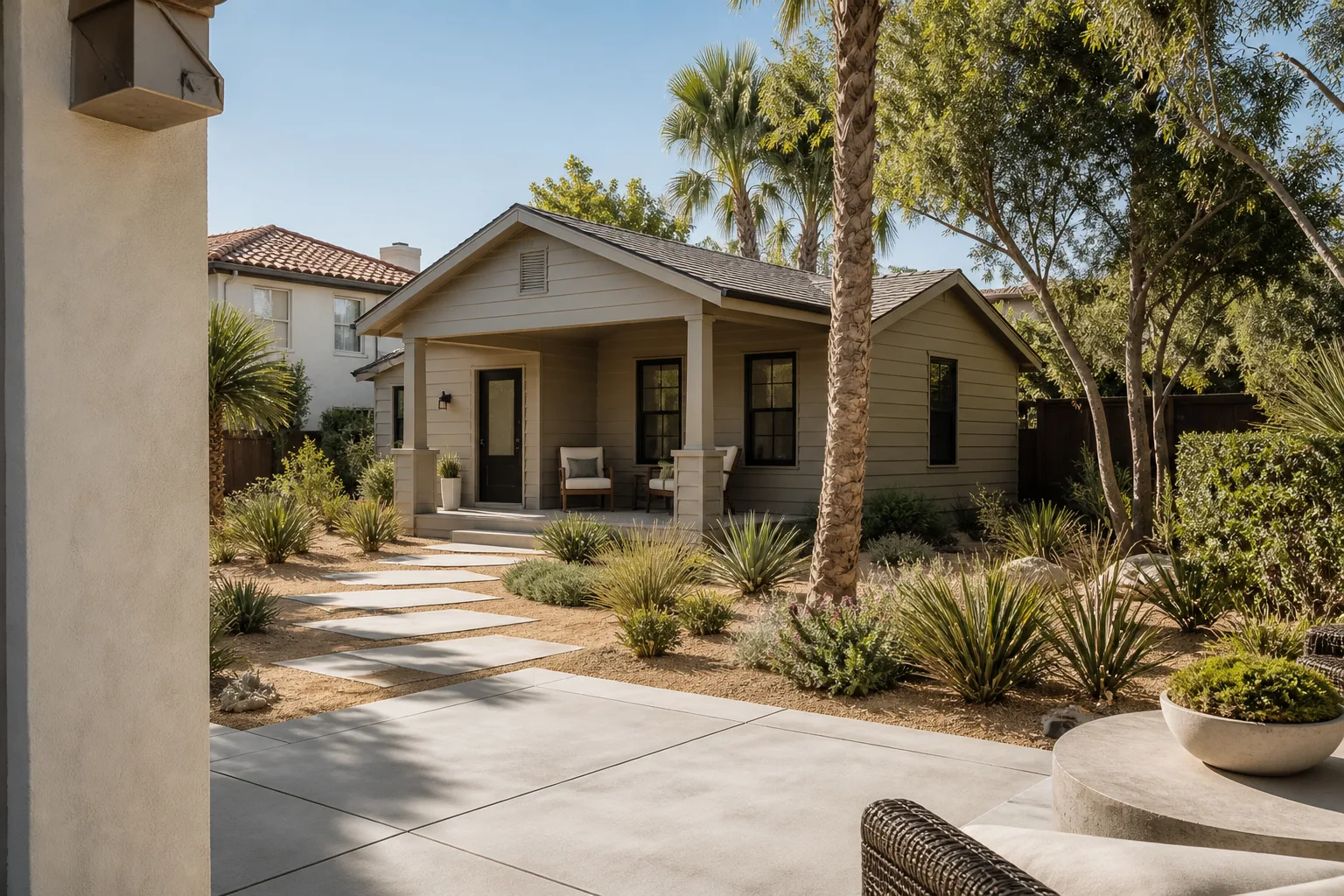
Home additions and ADU construction in Orange County using CertainTeed materials typically runs $45,000 to $130,000, depending on square footage, foundation work, and roofline complexity. We stock and install CertainTeed framing, siding, insulation, and roofing components for additions and accessory dwelling units, and we can usually have a crew on site within a week of the written estimate being signed. Most owners come to us with one of two scenarios: either they’ve got an existing addition that’s showing water intrusion at the wall-to-roof transition, or they’re planning a new ADU and want to make sure the CertainTeed product line is spec’d correctly from day one, so the whole assembly holds up against coastal humidity and Santa Ana heat.
We’re an independent Orange County contractor. We’re not affiliated with CertainTeed, but we install their products every week and we know how their components interact when the framing moves, which is what separates a clean build from a callback in eighteen months.
Which CertainTeed Models This Applies To
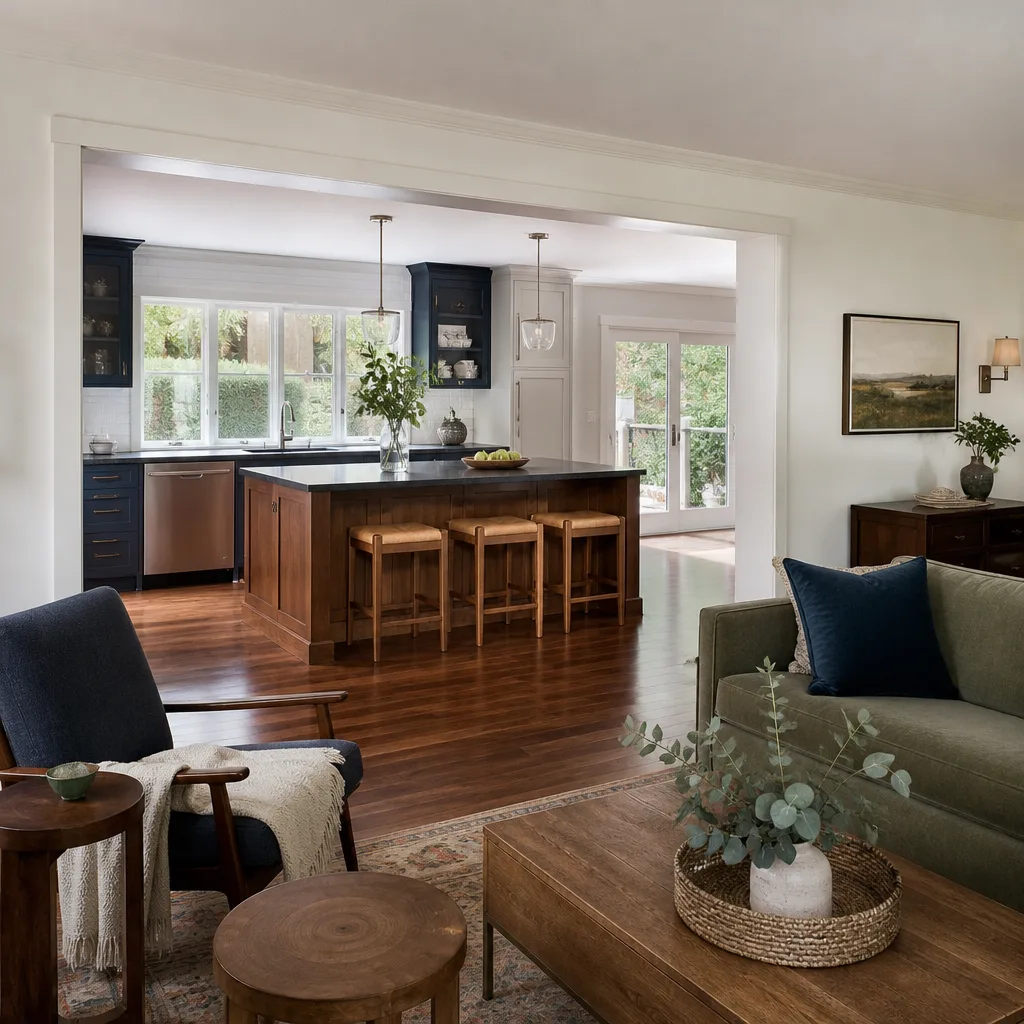
For new construction, the two CertainTeed systems we use most are the Board & Batten vinyl siding and the Landmark asphalt shingle line, both paired with MemBrain air barriers and Optima insulation. The Landmark series runs the full roof system, including Solaris Plus underlayment and WinterGuard at the eaves, which matters a lot in Orange County’s heavier coastal rain bands and the occasional attic condensation cycle we see in older track homes in Anaheim Hills and Fullerton.
The gotcha with CertainTeed, and the reason we verify every spec before ordering, is that their vinyl siding profiles are not interchangeable across the line. Board & Batten, Cedar Impressions, and Monogram all use different nail-hem depths, locking geometries, and trim profiles. If you have a failing section on an existing addition and someone orders the wrong profile, the seams won’t lock, and the first hot spell will make the installation telegraph through the wall. We measure the profile channel width on site and match it to the current CertainTeed product code before we write the order.
For an existing structure, the OEM-vs-aftermarket decision is straightforward: use CertainTeed when the failed component is part of a visible, color-matched assembly (siding, trim, shingles) and use an aftermarket equivalent only on internal components like flashing or underlayment where the material is hidden and the aftermarket product meets or exceeds the CertainTeed spec. We never mix profiles.
Styles & brands we work with







Signs Your CertainTeed Home Additions & ADU Is Failing
- Warped siding panels or visible gaps at the nail hem. This usually means the original installer drove nails too tight against the J-channel, so the panel can’t expand and contract with Orange County’s temperature swings. The panel buckles, then the lock edge releases.
- Moisture staining or soft drywall at the ceiling where the addition meets the main house. That intersection is the most common leak point on an addition or ADU roof, and it’s almost always a failed or missing WinterGuard transition at the valley or the wall-to-roof intersection.
- Fascia or soffit pulling away from the eave line. The CertainTeed soffit systems are sturdy, but they will sag if the original rough-in framing didn’t include a proper subfascia to receive the trim. This is one we see regularly on garage conversions and older ADUs that were built without a permit inspection.
- Insulation that looks fine but the room won’t hold temperature. Fiberglass batts that get even slightly compressed lose R-value fast. If the original build stuffed Optima batts into a shallow rafter bay, the R-value is compromised, and the room will bake in an Irvine summer.
- Cracking or lifting at the roofline shingles, especially near the ridge. CertainTeed Landmark shingles carry a strong warranty, but the warranty assumes proper attic ventilation. Without enough ridge and soffit venting, the shingles age prematurely, and the failure shows up first on south-facing pitches.
See the difference
 Before
 After
After Before
 After
After Before
 After
AfterReplacement Cost & What’s Included
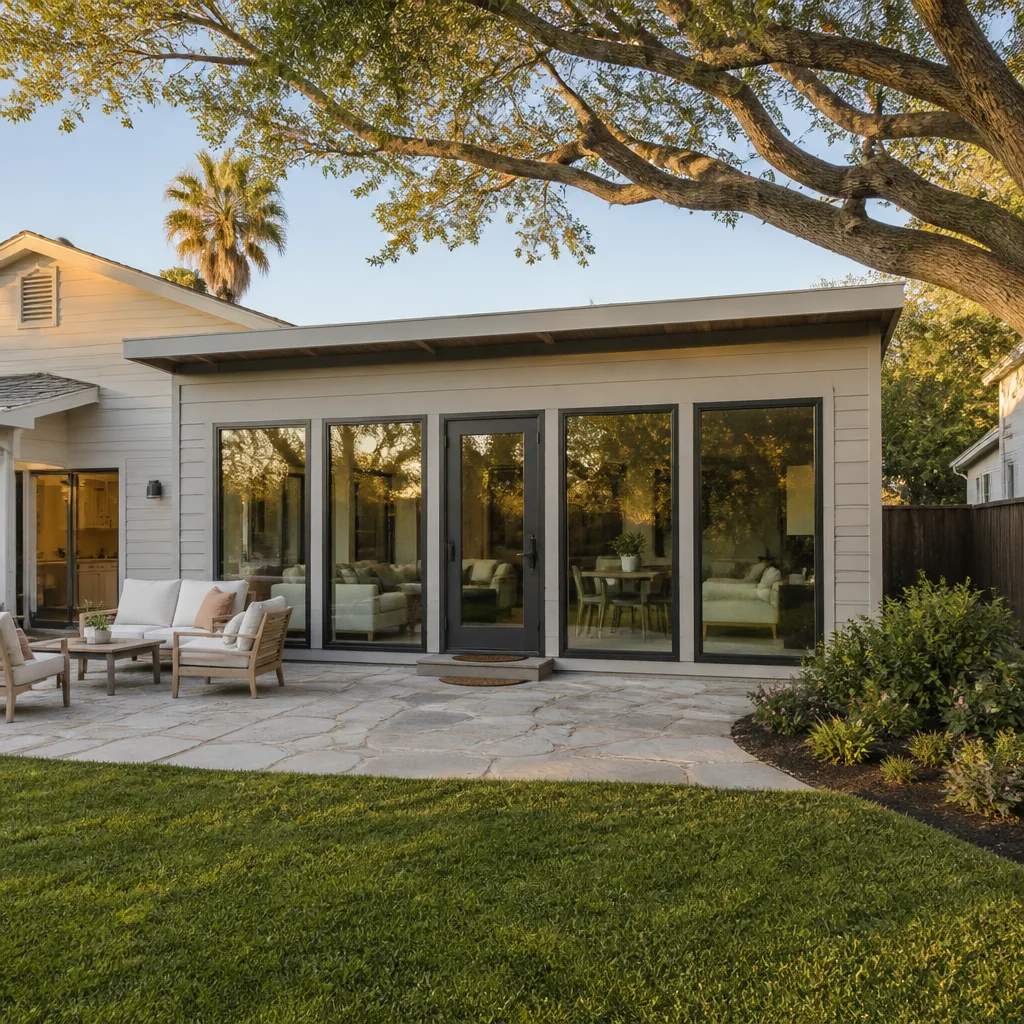
In Orange County, an addition or ADU built with CertainTeed materials lands between $45,000 and $130,000. That range covers a modest bump-out with one bedroom and a small roofline tie-in up to a full ADU with a new foundation, plumbing rough-in, and a complete Landmark roof assembly. The price drivers are foundation type (slab versus raised), roofline complexity, and whether we’re opening the wall of the existing home or building standalone.
Every Bradford estimate is a written number. We list the CertainTeed product codes, the square footage, the labor line items, and the permit scope. No numbers move at the door. The 365-Day Done Right Promise covers our workmanship and installation for a full year after the build is complete: if the siding pulls, the roof leaks, or the trim separates inside twelve months, we come back and correct it at no charge.
The materials warranty from CertainTeed runs separately on top of our workmanship guarantee. We’ll register the products and hand you the manufacturer’s warranty documents with the project closeout.
DIY or Call Us?
What a homeowner can safely check: loose trim, visual gaps, and visible water staining at ceiling intersections. If you spot a loose nail hem on a siding panel, leave it alone. That panel needs to be unclipped, and forcing it back without the right profile tool will crack the lock leg and turn a re-clip into a panel replacement.
This is not a DIY-friendly product family in the failure scenarios we see. Siding and roofing on an addition involve working at height, and any roof tie-in work means opening the building envelope on a structure that’s already proven it will leak. The risk is water behind the wall, and that’s the kind of repair that costs more than the original job. If your CertainTeed siding, trim, or roofline is failing, call (562) 262-2907. We’ll send a uniformed, background-checked technician to inspect it, and you’ll get the written number before we touch any tool.
FAQs
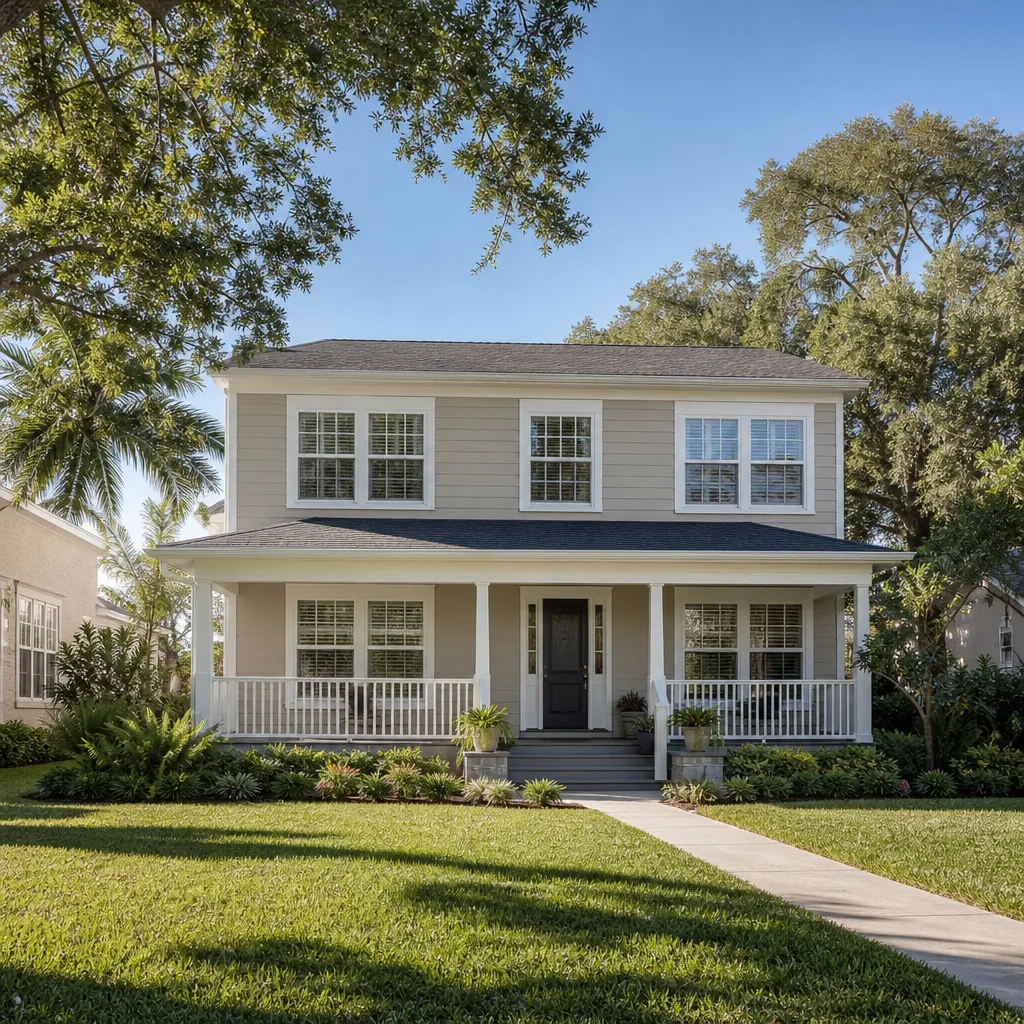
CertainTeed Landmark shingles typically last 20 to 30 years in Orange County when the attic ventilation is correct, and Board & Batten vinyl siding commonly holds 15 to 25 years. The California sun is harder on south-facing exposures than most other climates, which is why we check nailing clearance and expansion gaps carefully at installation. Call (562) 262-2907 for a written evaluation of your specific addition.
Yes, in many cases we can repair and re-clip siding panels, re-secure soffit, or re-flash a roofline tie-in without replacing the whole system, but only if the surrounding material is sound. If the failure is widespread or the substrate behind it has rot, replacement is the more durable answer, and we’ll give you a written quote for both options.
A straightforward addition in Orange County typically runs 10 to 14 weeks including permit approval and inspections. Every project gets a written scope and a schedule before we start, so you’ll know the milestone dates and what ‘squared away’ looks like at close: a clean site, the documented scope in your hand, and the signed written guarantee.
We stock the most common CertainTeed trim profiles, J-channel, and finishing accessories on our trucks, but panel colors and specific profiles are matched and ordered for each project. Ordering runs 3 to 7 days through our supplier network. We’ll confirm the exact product code with you on the written estimate before anything gets purchased.
Written by Curtis Lane, Owner, Bradford Remodeling Co – Orange County at Bradford Remodeling Co Orange County, serving Orange County and nearby areas.


